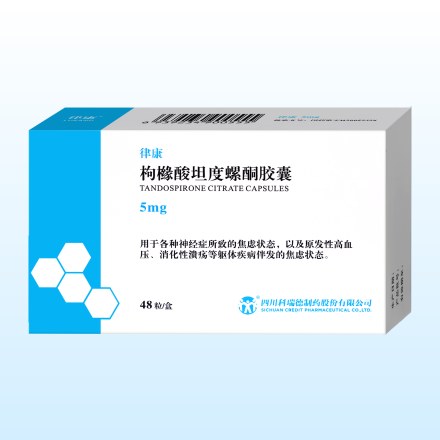
比较坦度螺酮与阿普唑仑对人的行为影响和滥用倾向(英)
ABBREVIATIONS: ARCI, Addiction Research Center Inventory; PCAG, pentobarbital, chlorpromazine, alcohol group; LSD, lysergic acid dieth- ylamide; POMS, Profile of Mood States questionnaire; DSST, Digit Symbol Substitution Test; ANOVA, analysis of variance; 1-PP. 1-(2-pyrimidinyl)- piperazine;HT, serotonin. 683 oo22-356W94/2712-o683$03.OO/o THE JouiuAi. OF PHAP.MACOLOGY 4um ExPERIMEWFALTHxsmtmcs Copyright C 1994 by The American Society for Pharmacologj and Experimental Therapeutics ,JPET 271:683-694, 1994 Tandospirone and Aiprazolam: Comparison of Behavioral Effects and Abuse Liability in Humans1 SUZETTE M. EVANS,2 JOSEPH R. TROISI ll and ROLAND R. GRIFFITHS Departments of Psychiatiy and Behavioral Sciences (S.M.E., J.R.T., R.R.G.) and Neuroscience (R.R.G.), Johns Hopkins University School of Medicine, Baltimore, Maryland Accepted for publication July 11, 1994 Tandospirone is a novel nonbenzodiazepine anxiolytic/antide- pressant that acts primarily at the serotonin-1A receptor. In the present study, the behavioral effects and abuse liability of tandospirone were characterized relative to those of the ben- zodiazepine, alprazolam. In an outpatient setting, the acute effects of placebo, tandospirone citrate (40, 80 and 160 mg) and alprazolam (0.5, 1.0 and 2.0 mg) were assessed with a double-blind, cross-over design in 14 male volunteers with histories of sedative drug abuse. Drug effects were assessed on behavioral performance tasks; observer ratings of drug ef- fect; and subject ratings of strength of drug effect, mood and drug liking. Both alprazolam and tandospirone produced com- parable dose-related increases in subject- and observer-rated strength of drug effect. The peak drug effect occurred approx- imately 2 hr after drug administration; the time to peak did not differ between the two drugs. Aiprazolam produced greater impairments on psychomotor performance than did tandospi- rone. Alprazolam produced dose-related increases in subject- rated drug liking; tandospirone, in contrast, produced dose- related increases in subject-rated drug disliking. The highest dose of alprazolam was predominantly classified by subjects as being a benzodiazepine or a barbiturate (71 %) in contrast to the highest dose of tandospirone (29%). Across subjects, tan- dospirone plasma concentrations after a single dose of 160 mg were significantly correlated with several subjective and behav- ioral measures. The present study demonstrates that tandospi- rone and alprazolam can be clearly differentiated on the basis of subjective effects and performance measures. The overall profile indicates that tandospirone has a significantly lower abuse liability than does alprazolam. Although benzodiazepines are useful in the treatment of anxiety disorders, they produce a number ofside effects, such as sedation, muscle relaxation and a withdrawal syndrome on abrupt cessation (Ashton, 1991; Busto and Sellers, 1991; Lader, 1991). Furthermore, the abuse liability of benzodiaz- epines, particularly diazepam and alprazolam, has been clearly documented among certain subgroups, including sed- ative abusers (de Wit and Griffiths, 1991), methadone-main- tamed patients (Weddington and Carney, 1987; Iguchi et at., 1993), alcoholic patients (Ciraulo et at. , 1988) and possibly moderate drinkers (de Wit et at. , 1989). This has stimulated efforts to develop novel anxiolytics with fewer side effects and Received for publication February 23, 1994. 1 This work was supported in part by National Institute on Drug Abuse grant DA-03889 and by Pfizer Pharmaceuticals, Inc. Portions of these data were presented to the European Behavioural Pharmacology Society in Cam- bridge, England, August 1992; and the American College of Neuropsychophar- macology in San Juan, Puerto Rico, December 1992. 2 Currently at the New York State Psychiatric Institute and Department of Psychiatry, College of Physicians and Surgeons of Columbia University, New York, NY. 3 Currently at the Department of Psychology, Saint Anaelm College, Manchester, NH. less abuse liability than benzodiazepines. One such group of compounds is the azapirone family (e.g. buspirone, ipsapi- rone and gepirone), which acts principally at the 5-HT1A receptor. A substantial body of data implicate a reduction in central serotomn neurotransmission as a fundamental effect of anxiolytics (Hamik et at. , 1990; New, 1990). Although benzodiazepines exert their effects through the y-aminobu- tyric acid-benzodiazepin&chioride-ionophore complex (Haefely, 1989), they also have been shown to decrease 5-HT activity (Hamik et at. , 1990). Of the azapirones, buspirone has been investigated the most widely. Buspirone was shown to be as effective as ben- zodiazepines in the treatment of anxiety disorders in some clinical studies (Feighner et at. , 1982; Rickels et at. , 1982; Pecknold et al. , 1989) but not in others (Olajide and Lader, 1987). Buspirone also lacks many of the side effects corn- monly associated with the benzodiazepines, including drows- iness and sedation (Goldberg and Finnerty, 1982; Wheatley, 1982), and performance impairment (Mattila et at. , 1982, 1986; Lucid et at. , 1987). In addition, human experimental studies suggest that buspirone has a lower abuse liability at HAM-TMC Library on August 31, 2009 jpet.aspetjournals.orgDownloaded from 684 Evans et al. Vol. 271 than benzodiazepines (Cole et at. , 1982; Griffith et al. , 1986; Sellers et at. , 1992; Troisi et at. , 1993).
本页面为资料内容的在线呈现,便于检索与阅读;正式文件以原文件为准,处方药及专业资料请遵医嘱或由专业人员使用。
RELATED CONTENT
相关信息
相关产品