
The effects of AP521, a novel anxiolytic drug, in three anxiety models and on serotonergic neural transmission in rats
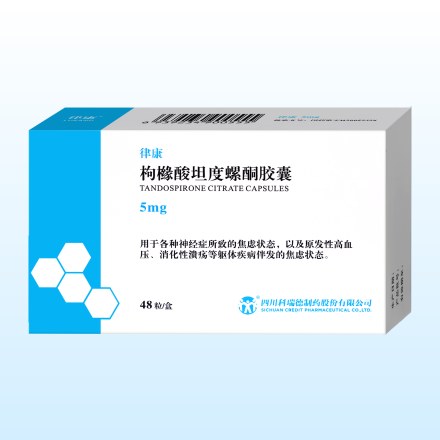
We investigated the anxiolytic effects and mechanism of action of a new anxiolytic drug, ( R)-piperonyl- 1,2,3,4-tetrahydro[1]benzothieno[2,3-c]pyridine-3- carboxamide hydrochloride (AP521). AP521 showed equal or more potent anxiolytic-like effects compared with diazepam, a benzodiazepine receptor agonist, or tandospirone, a partial 5-hydroxytryptamine (5-HT) 1A receptor agonist, in three rat anxiety models; the Vogel-type con flict test, elevated plus maze test, and conditioned fear stress test. Although AP521 did not bind to the benzodiazepine receptor, it did bind to 5-HT 1A, 5-HT 1B, 5-HT 1D, 5-HT 5A and 5-HT 7 re- ceptors, and showed agonist activity for the human 5-HT 1A receptor expressed in HEK293 cells. Tan- dospirone, which can stimulate the presynaptic 5-HT 1A receptors in the raphe, tended to decrease extracellular 5-HT concentration in the medial prefrontal cortex (mPFC) in rats. In contrast, AP521 increased extracellular 5-HT concentration. In addition, AP521 enhanced the anti-freezing effect of cit- alopram, a selective serotonin reuptake inhibitor, in the fear conditioning model in rats and enhanced the citalopram-caused increase of the extracellular 5-HT concentration in the mPFC. These results suggest that AP521 exhibits potent anxiolytic effects by acting as a postsynaptic 5-HT 1A receptor agonist and by enhancing serotonergic neural transmission in the mPFC by a novel mechanism of action. © 2014 Japanese Pharmacological Society. Production and hosting by Elsevier B.V. This is an open access article under the CC BY-NC-ND license ( http://creativecommons.org/licenses/by-nc-nd/4.0/).
本页面为资料内容的在线呈现,便于检索与阅读;正式文件以原文件为准,处方药及专业资料请遵医嘱或由专业人员使用。
RELATED CONTENT
相关信息
相关产品