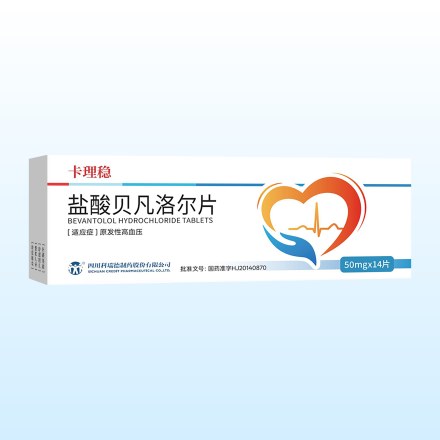
盐酸贝凡洛尔的临床前药理学特征
Bevantolol hydrochloride, a beta adrenoceptor antagonist, can be catego- rized using conventional schemes as being cardioselective, devoid of intrinsic sympathomimetic activity and having weak membrane-stabilizing and local an- esthetic properties. The cardioselectivity of bevantolol was conferred by the incorporation of a 3,4-dimethoxyphenyl moiety into the terminal amino portion of the molecule. This portion of the molecule also appears to account for bevan- tolol’s in vitro binding affinity at alpha-adrenoceptor sites; the in vivo signifi- cance of which remains unclear. In the various cardiovascular disease-state models, bevantolol’s profile differed from that of propranolol, i.e., there was no initial pressor response in spontaneously hypertensive or renal hypertensive rats. In a myocardial ischemia model, bevantolol, unlike propranolol, increased contractile function in the ischemic myocardium. A ring hydroxylated urinary metabolite, which occured only in trace amounts in human urine, had an inter- esting profile when studied in animals at pharmacologic doses. It ranked high in cardioselectivity (like bevantolol), but unlike bevantolol showed significant in- trinsic beta sympathomimetic activity. The clinical significance of this metabo- lite, if any, remains to be established. Collectively the preclinical profile of bevantolol showed it to have an interesting profile for a beta adrenoceptor an- tagonist in a variety of pharmacologic test systems.
本页面为资料内容的在线呈现,便于检索与阅读;正式文件以原文件为准,处方药及专业资料请遵医嘱或由专业人员使用。